Sandbox
Building local gaming communities through interaction design.
Sandbox
Building local gaming communities through interaction design.
Year
2026
Scope
Interaction Design + Visual Identity
Client
MA in Iteraction Design
Duration
September 2025 – August 2026
Overview
Sandbox explores how interaction design can reconnect gamers with their local communities. While online games make it easy to play with anyone, research showed many players still wanted the social benefits of meeting people in person but struggled with trust, awareness and discovering nearby events.
The project responds by combining digital convenience with real-world interaction, creating a platform that helps players discover communities while supporting organisers and local venues in building sustainable gaming spaces.
The Challenge
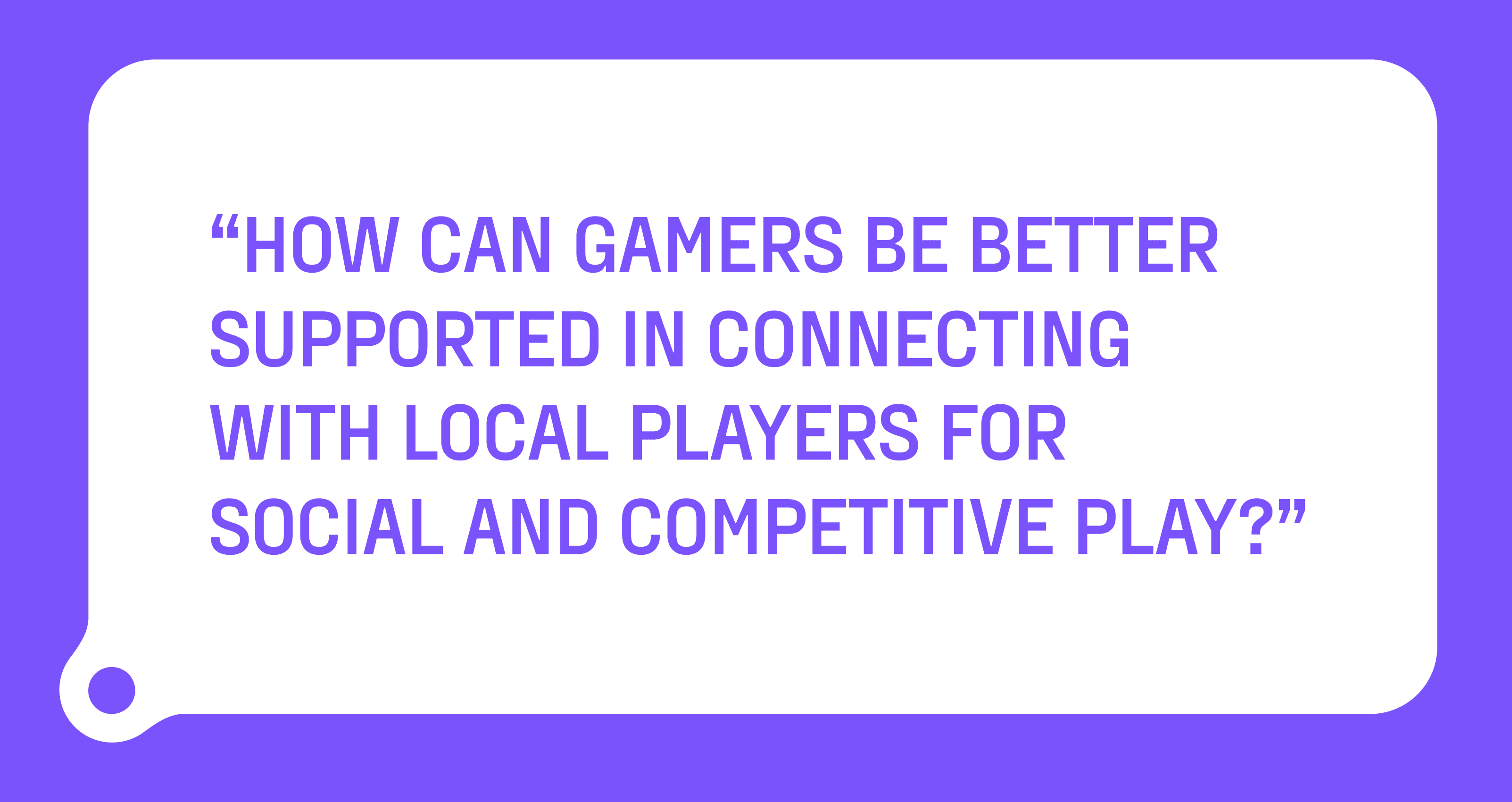
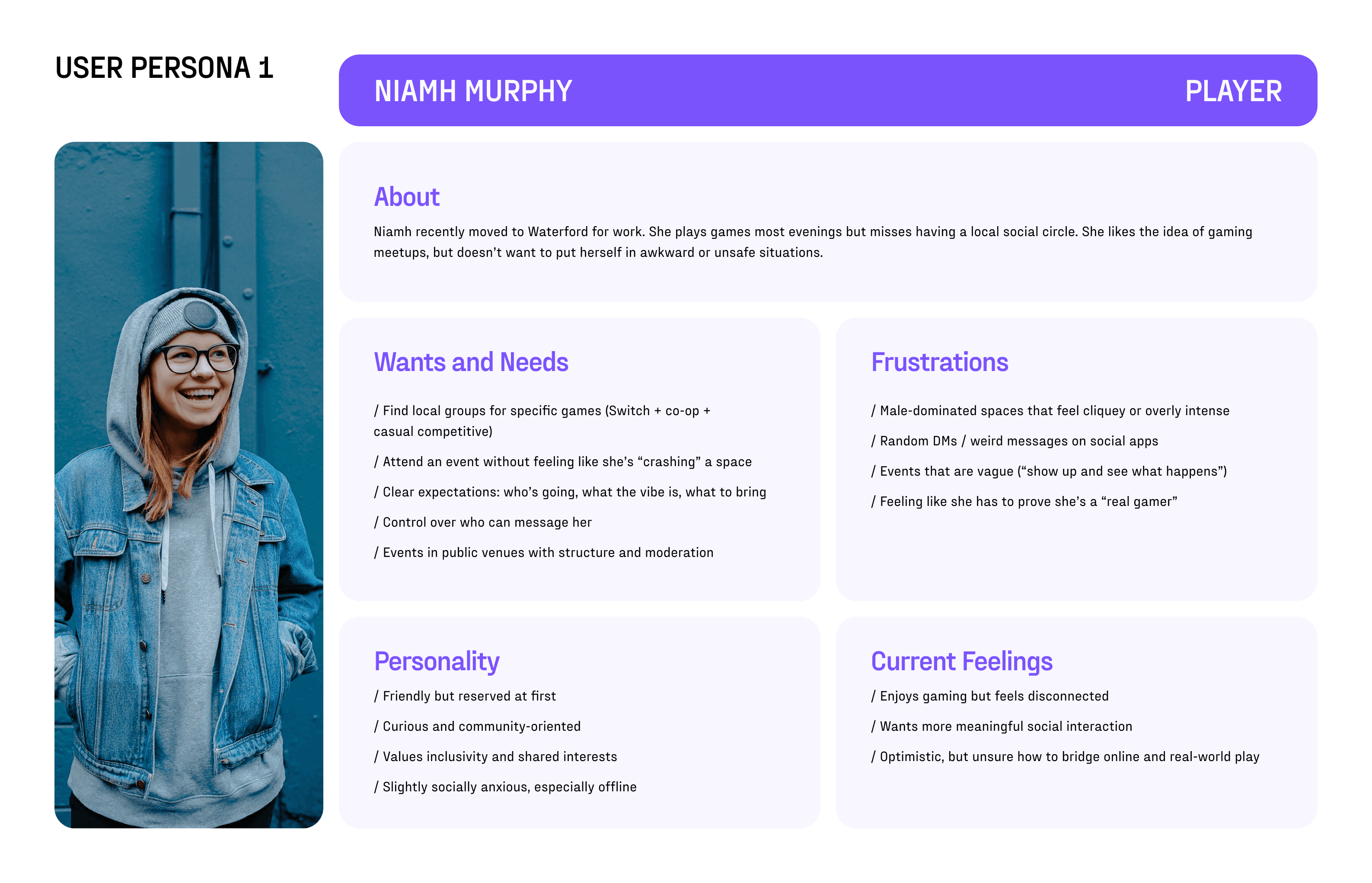
Despite gaming becoming increasingly social online, local gaming communities remain difficult to discover. Research found that players wanted more opportunities to meet locally, but barriers such as trust, safety, social anxiety and limited awareness prevented participation.
The Solution
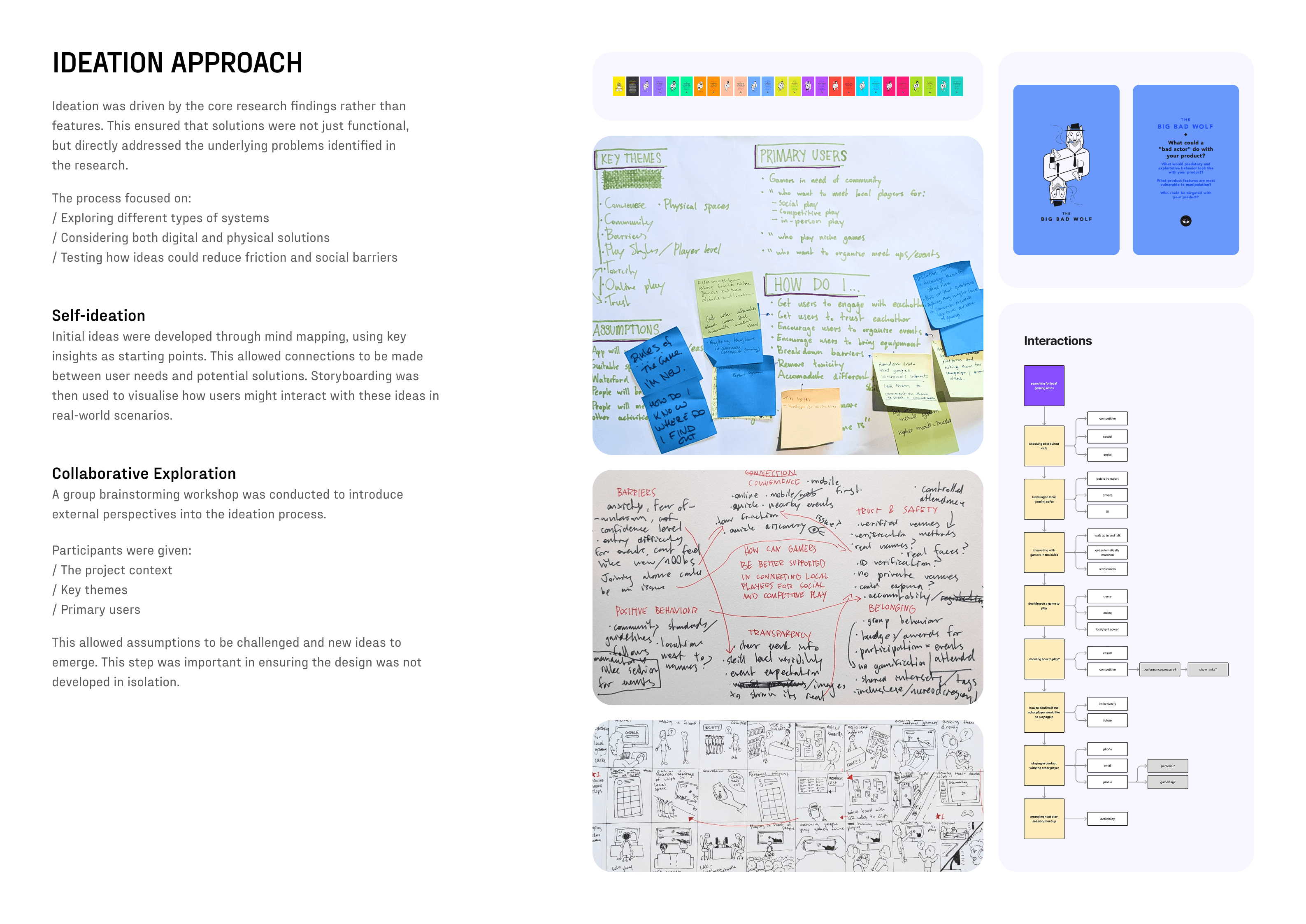
Using insights gathered from 267 survey responses and four semi-structured interviews, I designed Sandbox—a proximity-based platform centred around community discovery, transparent event information, organiser verification and QR-based attendance. Rather than replacing online gaming, Sandbox uses digital interaction to strengthen real-world communities and support existing local venues.
Deliverables
UX Research
Interaction Design
Mobile Prototype
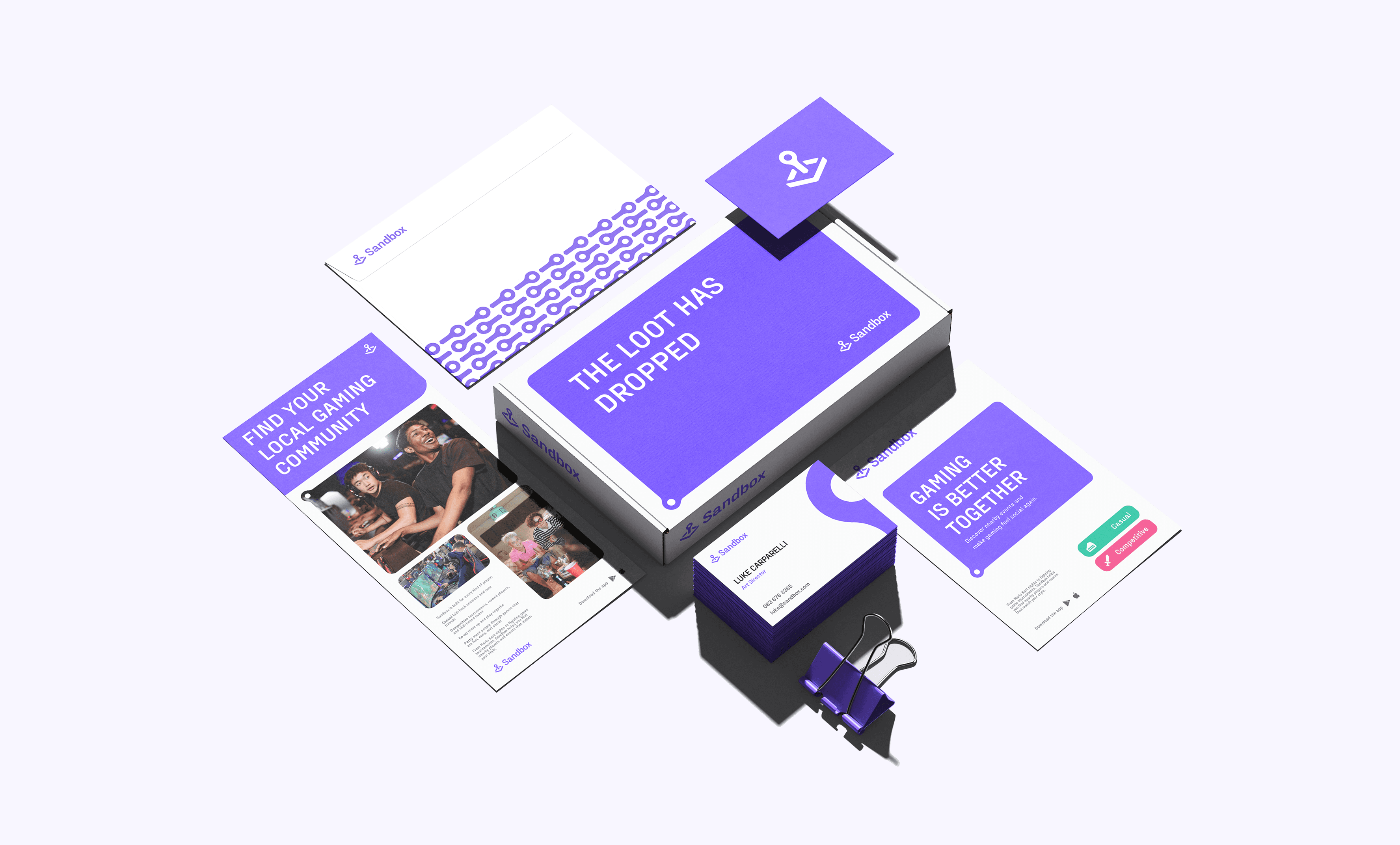
Brand Identity
Design System



















Year
2026
Scope
Interaction Design + Visual Identity
Client
MA in Iteraction Design
Duration
September 2025 – August 2026
Overview
Sandbox explores how interaction design can reconnect gamers with their local communities. While online games make it easy to play with anyone, research showed many players still wanted the social benefits of meeting people in person but struggled with trust, awareness and discovering nearby events.
The project responds by combining digital convenience with real-world interaction, creating a platform that helps players discover communities while supporting organisers and local venues in building sustainable gaming spaces.
The Challenge
Despite gaming becoming increasingly social online, local gaming communities remain difficult to discover. Research found that players wanted more opportunities to meet locally, but barriers such as trust, safety, social anxiety and limited awareness prevented participation.
The Solution
Using insights gathered from 267 survey responses and four semi-structured interviews, I designed Sandbox—a proximity-based platform centred around community discovery, transparent event information, organiser verification and QR-based attendance. Rather than replacing online gaming, Sandbox uses digital interaction to strengthen real-world communities and support existing local venues.
Deliverables
UX Research
Interaction Design
Mobile Prototype
Brand Identity
Design System